
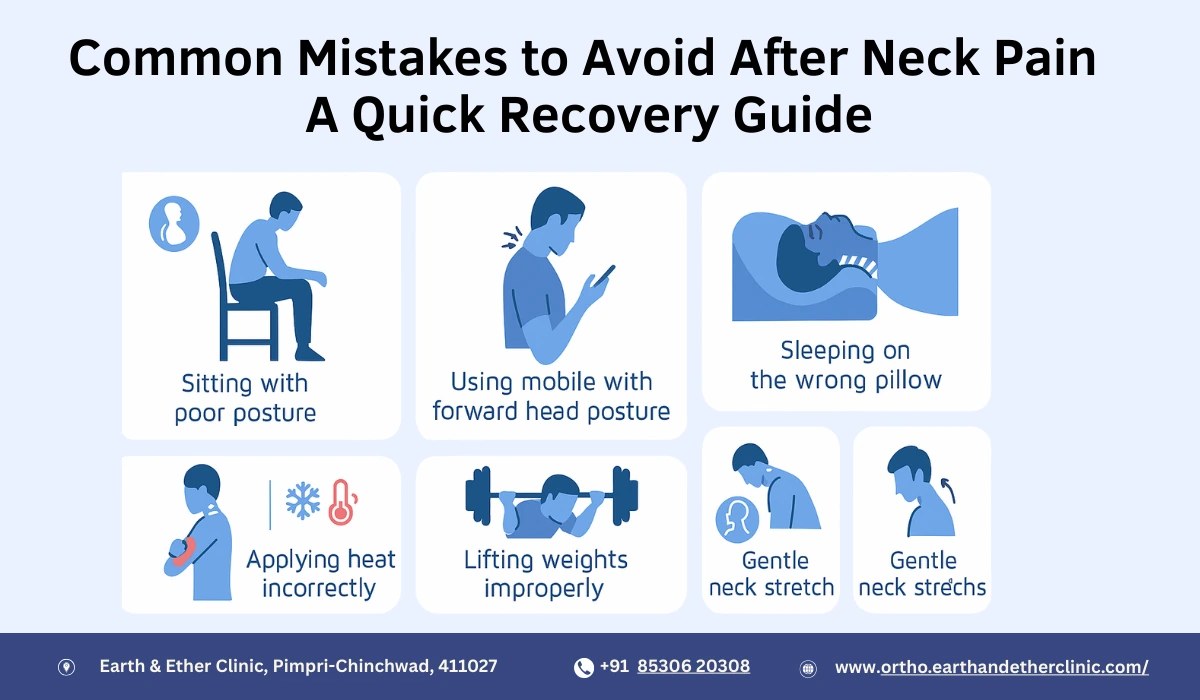
Common Mistakes to Avoid After Neck Pain: A Quick Recovery Guide
Neck pain is one of the most common musculoskeletal issues affecting people today. Whether it comes from incorrect posture, long hours at a desk, sudden jerks, heavy lifting, or sleeping in the wrong position, neck pain can disrupt your daily routine and reduce your productivity. While most people try to relieve it using home remedies or over-the-counter painkillers, recovery often gets delayed because of certain avoidable mistakes.
In this quick recovery guide, we highlight the most common mistakes people make after developing neck pain—and how to avoid them. These simple corrections can significantly speed up healing, prevent long-term stiffness, and protect your spine from future complications.
Understanding Why Neck Pain Happens
Neck pain usually results from:
- Poor posture (especially forward neck posture from mobile or laptop use)
- Muscle strain or ligament sprain
- Stress or emotional tension
- Sudden movements or whiplash injuries
- Weak neck and upper back muscles
- Sleeping without proper neck support
- Pinched nerves
- Osteoarthritis or degenerative changes
- Poor ergonomics at work
Whatever the cause, early care and correct approach are the key to quick recovery.
Common Mistakes to Avoid After Neck Pain
1. Ignoring the Pain and “Pushing Through It”
Many people assume neck pain will go away on its own and continue their routine activities—heavy lifting, intense workouts, long driving hours, or desk work without breaks.
Why this is harmful:
Ignoring the pain strains the muscles further and may worsen inflammation. In some cases, it can lead to chronic neck problems or nerve compression.
What to do instead:
- Rest for at least 24–48 hours.
- Avoid sudden or jerky neck movements.
- Resume activities gradually.
2. Using the Wrong Pillow or Sleeping Position
A common mistake after neck pain is sleeping on:
- Multiple pillows
- Very high or very flat pillows
- A hard pillow
- A pillow placed incorrectly
Sleeping on your stomach also twists the neck unnaturally.
Better approach:
- Use a medium-firm orthopedic pillow.
- Sleep on your back or side.
- Keep your neck aligned with your spine.
Proper neck support while sleeping speeds up recovery more than most people realize.
3. Excessive Mobile and Laptop Usage (“Tech Neck”)
Looking down at your mobile for long hours puts nearly 20–25 kg of pressure on the neck. After pain begins, continuing this habit delays healing.
Avoid:
- Browsing while lying down
- Holding the phone below eye level
- Long screen time without breaks
Do instead:
- Keep screens at eye level
- Follow the 20-20-20 rule
- Take 1–2 minute stretch breaks
4. Applying Heat at the Wrong Time
People often apply heat immediately after pain begins. However, this can increase swelling and worsen the condition if inflammation is present.
Rule:
- First 24–48 hours: Use cold compress
- After inflammation reduces: Apply heat for muscle relaxation
Alternate heat and cold only if advised by a specialist.
5. Poor Posture Throughout the Day
Slouched sitting, leaning forward while working, or sitting without back support puts continuous pressure on cervical muscles.
Avoid:
- Working on laptops in bed
- Long sitting without back support
- Hunching shoulders
Correct posture tips:
- Keep your ears aligned with your shoulders
- Sit upright with proper lumbar support
- Keep your screen at eye level
- Keep elbows close to the body when typing
Small posture corrections can reduce neck strain dramatically.
6. Self-Medicating Without Guidance
Many people take painkillers, muscle relaxants, or ointments without proper medical advice. This may temporarily reduce pain but can hide the underlying issue.
Don’t rely on:
- Over-the-counter painkillers
- Excessive balms or sprays
- Unnecessary medication combinations
Instead, consult a specialist, especially if pain lasts more than 3–5 days.
7. Avoiding Movement Completely
While rest is necessary, complete immobility can stiffen the muscles and slow down recovery. Some people try to immobilize their neck using collars for long periods—even when unnecessary.
Correct approach:
- Gentle neck movements
- Avoid heavy lifting but keep mild mobility
- Do not use a cervical collar without medical advice
Muscles heal better with controlled activity.
8. Incorrect or Unsafe Neck Exercises
Doing random YouTube exercises or aggressive stretches can aggravate muscle strain or pinch a nerve.
Avoid:
- Fast neck rotations
- Extreme bending
- Lifting weights before recovery
Do instead:
Perform only:
- Gentle stretches
- Slow rotations
- Isometric neck exercises
—but only when pain reduces.
If unsure, consult an expert for guided physiotherapy.
9. Ignoring Stress and Emotional Tension
Stress causes tightening of shoulder and neck muscles. Many people treat only the pain but ignore the emotional triggers.
Better solution:
- Practice relaxation techniques
- Deep breathing
- Meditation
- Shoulder and back stretching
- Adequate sleep
A relaxed body heals faster.
10. Resuming Gym or Sports Too Early
Returning to high-intensity workouts before your neck heals properly is one of the biggest mistakes. Heavy weightlifting, overhead exercises, boxing, and high-impact activities can worsen pain.
Guidelines:
- Resume gym only after pain subsides
- Start with light weights
- Avoid overhead lifts temporarily
- Strengthen neck and upper back muscles gradually
- Warm up properly before routines
11. Not Consulting a Specialist When Needed
Many people continue home remedies for weeks hoping the pain will disappear. This delay often worsens the condition, especially if pain is nerve-related.
You should consult a doctor if you experience:
- Persistent pain for more than 5–7 days
- Tingling or numbness in arms
- Sharp shooting pain
- Weakness in shoulders or hands
- Pain after an accident or sudden jerk
- Recurring stiffness
Getting early expert help ensures quicker and long-lasting recovery.
Sometimes, consulting the Best Orthopedic Surgeon in Pune becomes important, especially if your pain is accompanied by tingling, nerve symptoms, or chronic stiffness. A specialist ensures you get the right diagnosis and treatment before the condition worsens.
If you’re located around PCMC, visiting an experienced Orthopedic Doctor in Pimpri Chinchwad can help identify underlying cervical issues early and prevent complications like disc bulge or cervical radiculopathy.
Tips for Faster and Safer Neck Pain Recovery
- Maintain proper posture throughout the day
- Use a supportive ergonomic chair
- Keep monitors at eye level
- Take frequent breaks
- Strengthen your neck and upper back muscles
- Sleep with proper pillow alignment
- Stay hydrated
- Include anti-inflammatory foods
- Avoid smoking — it delays healing
- Practice stress-relief techniques
These simple habits can reduce pain faster and prevent recurrence.
When to See the Best Orthopedic Surgeon in Pune
You should seek advanced help if:
- Pain persists for more than 10–14 days
- You experience radiation to arms or shoulders
- There is weakness, tingling, or numbness
- You have chronic stiffness
- You suspect a cervical disc issue
- Pain occurs after an accident or fall
Early treatment by the Best Orthopedic Surgeon in Pune ensures faster recovery and prevents long-term complications.
Conclusion
Neck pain is common, but recovery largely depends on what you do after the pain begins. Avoiding these common mistakes—like ignoring pain, poor posture, wrong pillow use, excessive screen time, unsafe exercises, or delaying specialist consultation—can significantly improve your healing process.
By following correct posture habits, using proper neck support, performing guided exercises, and seeking timely medical advice, you can ensure faster recovery and prevent the pain from becoming chronic.
If symptoms persist or worsen, always consult an orthopedic specialist for accurate diagnosis and treatment.
Frequently Asked Questions:
- How long does neck pain take to heal?
Usually 3–7 days with proper care.
- Should I use ice or heat?
Ice for the first 48 hours, then heat.
- Is it okay to exercise with neck pain?
Avoid heavy workouts; do only gentle stretches.
- Can the wrong pillow cause neck pain?
Yes, poor pillow support worsens pain.
- When should I see a doctor?
If pain lasts over a week or causes numbness/tingling.
- Does stress worsen neck pain?
Yes, stress tightens neck muscles.
- Should I use a cervical collar?
Only if a doctor recommends it.
