
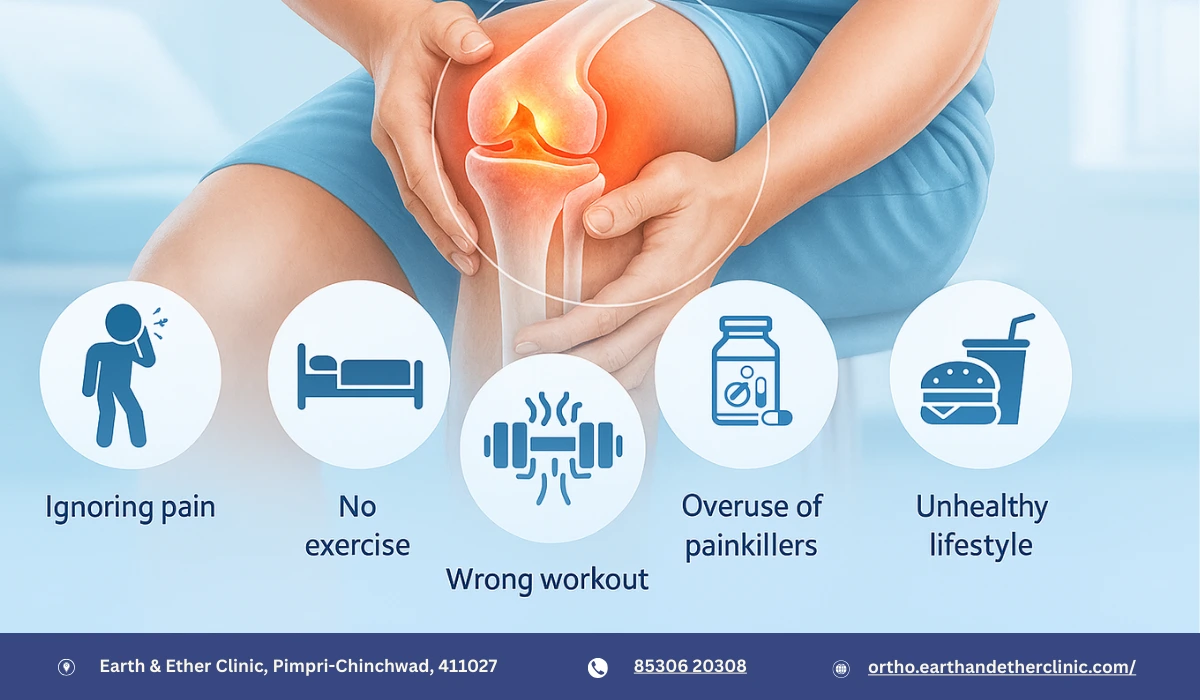
Avoid These 5 Common Mistakes in Managing Knee Osteoarthritis
Knee osteoarthritis (OA) is a degenerative joint condition that gradually wears down the cartilage protecting your knee. While it is most common in adults over 45, it increasingly affects younger individuals due to lifestyle habits, sports injuries, obesity, and prolonged sitting.
The good news?
Knee osteoarthritis can be successfully managed—and in many cases, its progression can be slowed significantly. However, many people unknowingly make mistakes that worsen their condition, increase pain, or limit mobility.
In this detailed guide, we’ll uncover the 5 most common mistakes people make while managing knee osteoarthritis—and more importantly, how to avoid them.
Understanding Knee Osteoarthritis
Before diving into mistakes, it’s important to understand what knee osteoarthritis truly is.
Knee OA occurs when the cartilage that cushions the knee joint wears away due to:
- Age-related degeneration
- Previous injuries (sports injuries, ligament tears, meniscus damage)
- Excess body weight
- Joint inflammation
- Repeated stress on the knee
- Poor posture and muscle weakness
As the cartilage thins, movement becomes painful. Bones rub against each other, causing stiffness, swelling, and reduced motion.
While osteoarthritis cannot be reversed, managing it correctly can significantly improve life quality and delay the need for surgery.
Mistake 1: Ignoring Early Symptoms or Delaying Diagnosis
One of the biggest reasons knee osteoarthritis worsens quickly is waiting too long to seek medical advice.
Common early signs people ignore:
- Mild pain during walking
- Stiffness after sitting
- Occasional swelling
- Clicking or cracking sounds
- Slight difficulty climbing stairs
Many assume these signs are temporary or age-related. However, early diagnosis allows you to start treatment when OA is most manageable.
Why avoiding early treatment is harmful
- The cartilage continues to wear down
- Muscle imbalance increases joint stress
- Daily activities become more painful
- Inflammation becomes chronic
- Joint deformity may begin
What to do instead
- Consult an orthopedic specialist as soon as symptoms begin
- Get an X-ray or MRI if recommended
- Begin strengthening exercises early
- Make lifestyle modifications before pain worsens
Early detection can delay progression by years and significantly reduce pain.
Mistake 2: Over-Resting or Avoiding Physical Activity
Most patients assume that resting the knee is the best way to reduce pain.
This is a myth.
Too much rest actually weakens the muscles supporting the knee, especially:
- Quadriceps
- Hamstrings
- Glutes
- Calf muscles
Weak muscles add more load on the knee joint, leading to increased pain and stiffness.
Why over-resting is harmful
- Reduced mobility
- Faster progression of osteoarthritis
- Weight gain (which increases knee pressure)
- Stiffness in the morning or after sitting
- Poor circulation
What to do instead
Engage in low-impact exercises:
✔ Strengthening Exercises
- Quadriceps strengthening
- Hamstring curls
- Hip abductor exercises
- Straight leg raises
✔ Low-Impact Aerobic Workouts
- Brisk walking
- Cycling
- Swimming
- Elliptical training
✔ Flexibility & Mobility Exercises
- Hamstring stretch
- Hip flexor stretch
- Calf stretch
- Yoga movements designed for joint health
Regular controlled movement reduces stiffness, increases mobility, strengthens joints, and slows disease progression.
Mistake 3: Overusing Painkillers Instead of Treating Root Causes
Painkillers provide temporary relief, but relying on them daily is harmful.
Common medications people overuse:
- NSAIDs (Ibuprofen, Diclofenac, Naproxen)
- Paracetamol
- Over-the-counter supplements not prescribed by a doctor
Why this is a dangerous mistake
- It masks symptoms without treating joint deterioration
- Long-term use damages kidneys, stomach lining, and liver
- Pain-killer dependency increases
- Patients continue harmful activities because pain is hidden
Painkillers should only be a short-term tool, not a long-term solution.
What to do instead
- Use painkillers only when absolutely necessary
- Follow a structured treatment plan
- Include physiotherapy, weight control, and lifestyle changes
- Ask your doctor about safe alternatives
- Use prescribed anti-inflammatory gels or hot/cold therapy
Managing the root cause—not just the pain—is key to long-term relief.
Mistake 4: Using Incorrect Exercises or Performing Them Wrong
Exercise is essential—but wrong exercise can damage your knees further.
High-impact activities to avoid:
- Jumping or running on hard surfaces
- Deep squats
- High-intensity weight training
- Twisting movements
- Jogging with improper footwear
Incorrect technique can stress the knee joint and worsen OA.
Why incorrect exercises worsen knee osteoarthritis
- Increased impact on already damaged cartilage
- Wrong muscle activation
- Higher risk of ligament or meniscus injury
- Increased swelling and inflammation
What to do instead
Work with a trained physiotherapist to:
- Learn proper form
- Build a personalized exercise plan
- Gradually increase intensity
- Strengthen supportive muscles
- Improve knee alignment and posture
When done correctly, exercise becomes one of the most powerful tools for managing knee OA.
Mistake 5: Ignoring Weight Management and Lifestyle Habits
Excess weight puts tremendous pressure on the knee joint.
For every extra kilogram, the knee experiences 4 extra kilograms of pressure during walking.
Effects of poor lifestyle habits
- Increased inflammation due to poor diet
- Weak muscles from sedentary lifestyle
- Increased joint load
- Higher progression rate of OA
- Reduced recovery capacity
Lifestyle mistakes that worsen knee osteoarthritis
- Sitting for long hours
- Poor sleeping posture
- Skipping warm-up before activity
- Not wearing supportive footwear
- Ignoring hydration
- Eating inflammatory foods (junk, sugar, red meat, processed items)
What to do instead
Adopt a balanced lifestyle:
✔ Weight Management
Losing even 5–10% weight reduces pain significantly.
✔ Anti-inflammatory Diet
Include foods like:
- Omega-3 rich fish
- Nuts & seeds
- Leafy greens
- Turmeric
- Berries
- Olive oil
✔ Supportive Footwear
Choose cushioned, orthopedic-friendly shoes.
✔ Adequate Sleep
Quality sleep helps reduce inflammation.
Making small changes consistently leads to long-term improvement.
Additional Tips to Manage Knee Osteoarthritis Effectively
✔ Use Hot and Cold Therapy
- Heat relieves stiffness
- Cold reduces swelling and inflammation
✔ Wear Knee Braces or Supports
Useful during walking, climbing, or long standing.
✔ Consider Injections if Recommended
- Hyaluronic acid
- PRP (Platelet-Rich Plasma)
- Steroid injections (short-term relief)
✔ Consult an Experienced Orthopedic Specialist
A qualified expert will guide you with personalized treatment, exercise plans, and lifestyle advice.
The Best Orthopedic Surgeon in Pune will never suggest unnecessary surgery and will focus on long-term joint preservation.
When Should You See a Doctor?
Seek medical help if you experience:
- Persistent knee pain
- Swelling that doesn’t reduce
- Knee giving way or instability
- Difficulty walking or climbing stairs
- Morning stiffness lasting more than 30 minutes
- Grinding sensations in the knee
An expert’s guidance can prevent years of discomfort and slow OA progression.
Do You Always Need Surgery?
Many people fear that osteoarthritis means knee replacement is unavoidable.
This is not true.
More than 70% of patients experience relief with:
- Physiotherapy
- Weight management
- Strengthening exercises
- Anti-inflammatory care
- Activity modification
- Injections (if required)
Surgery is recommended only when:
- Pain is severe
- Mobility is greatly reduced
- Conservative treatment fails
- Quality of life is affected
The Best Orthopedic Surgeon in Pune will always prioritize nonsurgical options first.
How the Right Orthopedic Specialist Helps
Choosing the right orthopedic surgeon can significantly improve your OA journey.
They help by:
- Providing accurate diagnosis
- Creating a customized treatment plan
- Recommending effective exercises
- Offering medical treatments when needed
- Guiding lifestyle and nutrition changes
- Monitoring your progress regularly
Working with the Best Orthopedic Surgeon in Pune ensures safe, professional, and long-term joint health improvement.
Conclusion
Knee osteoarthritis can be life-changing—but the way you manage it makes all the difference.
Avoiding these 5 common mistakes can dramatically slow disease progression, reduce pain, and help you stay active and mobile for years.
✔ Don’t ignore symptoms
✔ Don’t over-rest
✔ Don’t misuse painkillers
✔ Don’t exercise incorrectly
✔ Don’t ignore lifestyle changes
With the right treatment plan, professional guidance, and consistency, knee osteoarthritis becomes a manageable condition—not a limitation.
