
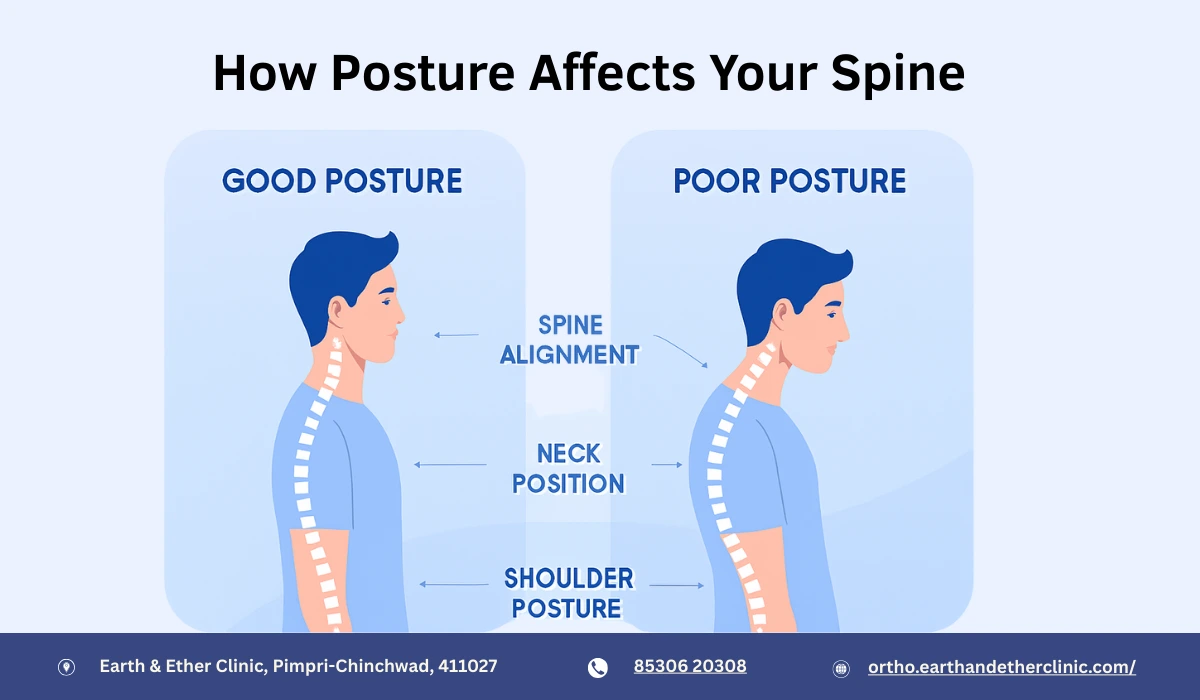
Maintaining good posture is one of the simplest yet most powerful ways to protect your spine. In today’s world—where long work hours, digital screens, and increasingly sedentary lifestyles dominate—poor posture has become one of the leading causes of back pain, neck stiffness, and long-term spinal problems. The good news? Improving posture is achievable with awareness and a few simple daily habits.
Whether you are working at a desk, using your smartphone, or simply walking, your posture shapes the health of your spine. This blog explains how posture affects your spine, the most common posture-related issues, and the simple fixes you can adopt today. These insights, recommended by the Best Orthopedic Surgeon in Pune, can help you build a pain-free, healthy, and active lifestyle.
Understanding the Spine: Why Posture Matters
The spine is a remarkable structure—strong, flexible, and designed to support movement. It consists of:
- Vertebrae that form the backbone
- Intervertebral discs that cushion your spine
- Muscles and ligaments that support posture and mobility
- Spinal cord and nerves that transmit signals throughout your body
Your posture directly impacts how these structures function. When your posture is aligned correctly, the spine functions optimally. But when you slouch, bend forward excessively, or stand poorly, stress builds up on the muscles, joints, nerves, and discs.
Over time, this added strain can lead to:
- Back pain
- Neck pain
- Disc degeneration
- Poor flexibility
- Headaches
- Breathing difficulties
- Reduced mobility
Understanding these effects is the first step to improving your spine health.
How Poor Posture Affects the Spine
Let’s look at the most common ways poor posture negatively impacts your spine and overall health.
1. Increased Pressure on Spinal Discs
Your spinal discs act as shock absorbers. Poor posture, such as leaning forward at your desk or hunching while using your phone, increases pressure on these discs. This may cause:
- Disc bulging
- Disc herniation
- Lower back pain
- Early disc degeneration
The forward head posture alone can add up to 20–30 kg of extra pressure on your cervical spine.
2. Strain on Muscles and Ligaments
Your muscles work continuously to keep you upright. When you maintain poor posture, these muscles overwork, leading to:
- Muscle fatigue
- Stiffness
- Shoulder and neck tightness
- Reduced muscle strength
This imbalance also increases the risk of injury during everyday activities.
3. Reduced Lung Capacity
Slouching compresses your chest and lungs. Studies show that poor posture can reduce lung capacity by up to 30%, affecting your breathing and energy levels.
4. Nerve Compression
Misalignment of the spine can pinch nerves, leading to:
- Pain radiating to arms or legs
- Numbness
- Tingling
- Weakness
If left untreated, this can progress to serious nerve-related issues.
5. Digestive Issues
Slouched posture compresses abdominal organs, slowing digestion and contributing to issues like:
- Constipation
- Acid reflux
- Bloating
Correct posture improves digestion by allowing abdominal organs to function properly.
6. Headaches and Fatigue
Poor posture strains the neck and shoulders, reducing blood flow and stressing muscles. This tension often leads to:
- Tension headaches
- Fatigue
- Reduced focus
Fixing your posture reduces strain and improves productivity.
Common Types of Poor Posture
Being aware of posture mistakes can help you correct them.
✦ Forward Head Posture (Tech Neck)
Caused by long hours on phones or laptops, this posture strains the neck and upper spine.
✦ Hunched Shoulders
Often a result of weak upper-back muscles and a collapsed chest position.
✦ Sway Back
Hips pushed forward and shoulders slouched—common in people who stand for long periods.
✦ Rounded Back (Kyphotic posture)
Seen in people who sit for extended hours, especially with poor chair support.
✦ Anterior Pelvic Tilt
Lower back is arched excessively, often due to weak core and tight hip flexors.
Identifying your posture pattern is the first step to fixing spine-related discomfort.
Simple Fixes for Better Posture and Everyday Comfort
Improving posture does not require extreme lifestyle changes. Small, consistent habits can make a big difference.
1. Maintain Neutral Spine Alignment
A neutral spine keeps your:
- Head aligned with your shoulders
- Shoulders relaxed
- Core engaged
- Lower back in natural curve
To achieve this:
- Sit with your back straight
- Keep both feet flat on the floor
- Avoid crossing legs for long periods
- Use your chair’s lumbar support
2. Set Up an Ergonomic Workspace
A well-designed workstation can dramatically improve your posture.
Desktop/Laptop Setup Tips:
- Keep your screen at eye level
- Maintain an arm’s distance from the screen
- Keep elbows at a 90-degree angle
- Use an ergonomic chair with lumbar support
- Keep wrists straight while typing
Add-ons that help:
- Laptop stand
- External keyboard and mouse
- Footrest (if needed)
An ergonomic setup reduces neck, shoulder, and lower-back strain.
3. Take Frequent Movement Breaks
Sitting too long—even with perfect posture—is harmful. Every 30 minutes, stand up, stretch, or walk for a minute. Movement improves:
- Blood flow
- Muscle flexibility
- Disc hydration
- Mental focus
Make this a habit at home and work.
4. Strengthen Your Core and Back Muscles
A strong core stabilizes your spine, keeping posture aligned.
Best exercises for posture improvement:
- Planks
- Glute bridges
- Cat-cow stretch
- Chin tucks
- Shoulder blade squeezes
- Thoracic extension stretch
- Wall angels
Perform these exercises 10–15 minutes daily for noticeable improvement.
5. Avoid “Tech Neck” While Using Mobiles
Smartphone posture is one of the biggest posture killers today.
Fixes:
- Hold your phone at eye level
- Avoid looking down for long stretches
- Use voice-to-text when possible
- Stretch your neck every hour
Small changes reduce neck strain significantly.
6. Maintain Good Standing Posture
When standing:
- Keep your weight evenly distributed
- Align your ears, shoulders, hips, and ankles
- Avoid locking your knees
- Wear supportive footwear
This reduces strain on your spine and improves energy levels.
7. Improve Posture While Walking
Walking is healthy, but posture matters.
Tips:
- Keep your head up and look forward
- Swing your arms naturally
- Keep shoulders relaxed
- Engage your core
- Avoid leaning forward
Good walking posture reduces spinal stress and prevents long-term wear.
8. Use Proper Posture While Sleeping
Sleep posture affects your spine more than you realize.
Best Sleeping Positions:
- On your back with a pillow under knees
- On your side with a pillow between legs
Avoid:
- Sleeping on your stomach (causes neck twisting)
Use a medium-firm mattress and a pillow that supports your neck’s natural curve.
9. Strengthen Postural Awareness
Practice intentional self-checks:
- Are your shoulders hunched?
- Is your neck forward?
- Are you slouching?
- Are both feet planted while sitting?
Use reminders or apps to stay mindful of your posture.
10. Manage Stress for Better Posture
Stress tightens muscles, especially around the shoulders and neck. This leads to slouching and stiffness.
Try:
- Deep breathing
- Yoga
- Meditation
- Stretching
- Mindful breaks during the day
Relaxed muscles maintain posture more naturally.
When to Seek Medical Help
While improving posture helps significantly, some symptoms require professional assessment:
- Persistent back or neck pain
- Numbness or tingling
- Radiating pain into arms or legs
- Severe muscle stiffness
- Limited mobility
- Spinal deformities
In such cases, consulting a specialist is essential. Many patients benefit from early diagnosis, posture correction therapy, physiotherapy, and spinal strengthening programs offered by experts such as the Best Orthopedic Surgeon in Pune.
Conclusion
Posture plays a vital role in maintaining spinal health, preventing pain, and improving overall quality of life. By adopting simple posture correction strategies—like adjusting your workspace, staying active, strengthening your core, and practicing mindful alignment—you can significantly reduce spinal strain and enjoy daily comfort.
Remember, spinal health is a lifelong journey. Start implementing these habits today, and your spine will thank you in the years to come.
If posture-related pain persists, do not ignore it—professional evaluation is essential for long-term wellness and mobility.
FAQs
1. Why is good posture important?
Good posture reduces strain on your spine, prevents back and neck pain, and improves breathing, flexibility, and overall comfort.
2. Can poor posture cause long-term damage?
Yes. Long-term poor posture can lead to disc issues, chronic pain, nerve compression, and reduced mobility.
3. How can I improve my posture at work?
Use an ergonomic chair, keep your screen at eye level, sit upright, and take short breaks every 30 minutes.
4. What are the best exercises for posture?
Planks, chin tucks, shoulder blade squeezes, cat-cow stretches, and wall angels help strengthen posture muscles.
5. Does using a phone affect posture?
Yes. Looking down at your phone causes “tech neck,” increasing pressure on the cervical spine. Hold your phone at eye level.
6. When should I see a doctor for posture-related pain?
If pain is persistent, radiates to arms or legs, or causes numbness/weakness, seek medical evaluation promptly.
