
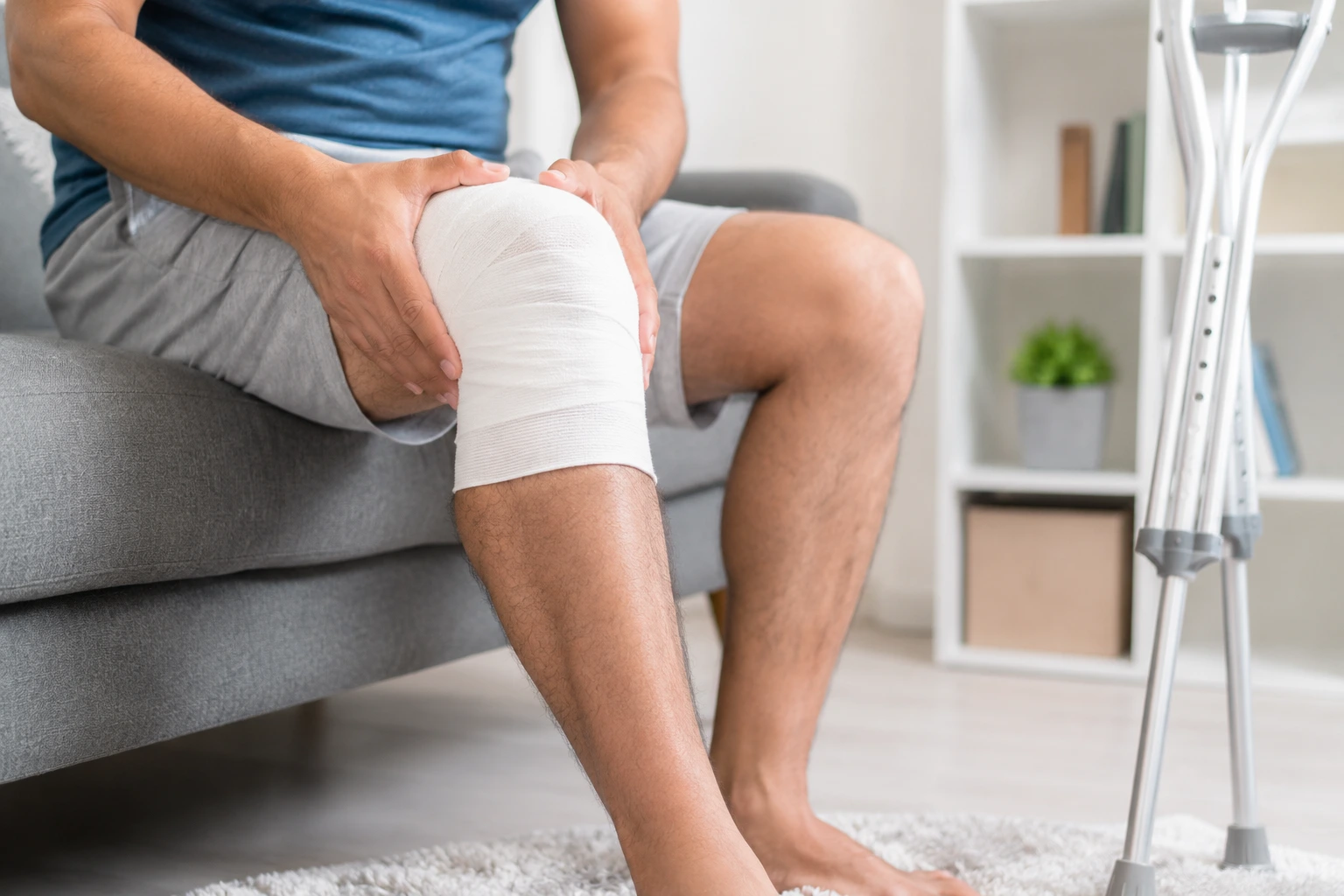
Bone and joint pain rarely announces itself politely. It shows up after a missed step on the stairs, a weekend cricket match, a long day hunched over a laptop, or simply the slow wear of age — and suddenly a task as ordinary as climbing to the first floor feels impossible. Orthopedic injuries are among the most common reasons people visit a doctor, yet most patients wait far too long before seeking help, hoping the pain will fade on its own. As the Best Orthopedic Surgeon in Pune and Pimpri Chinchwad region, Dr. Shrirang Kulkarni regularly reminds patients that early diagnosis is the single biggest factor separating a quick recovery from months of avoidable suffering. In this guide from Earth & Ether Clinic, we break down the seven orthopedic injuries every adult, parent, and athlete should be able to recognize — what causes them, how they feel, and when it’s time to stop self-diagnosing and book an appointment.
1. ACL Tear (Anterior Cruciate Ligament Injury)
The ACL is one of four major ligaments stabilizing the knee, and it is also one of the most frequently torn — especially among footballers, basketball players, and anyone who pivots or lands awkwardly. Most patients describe hearing or feeling a distinct “pop” at the moment of injury, followed by rapid swelling and a knee that feels like it might give way. Unlike a simple sprain, an ACL tear rarely heals on its own and often requires arthroscopic reconstruction, particularly in younger or physically active patients who want to return to sport.
Ignoring an ACL tear doesn’t make it disappear — it usually leads to repeated instability episodes and early cartilage damage. If your knee buckles unexpectedly during walking or sport, it’s worth getting an MRI rather than waiting it out.
2. Rotator Cuff Injury
The rotator cuff is a group of four muscles and tendons that keep the shoulder joint stable while allowing an enormous range of motion. Repetitive overhead activity — painting, swimming, weightlifting, or years of manual labour — gradually wears down these tendons, while a sudden fall onto an outstretched arm can tear them outright. The hallmark symptoms are a deep ache in the shoulder that worsens at night, weakness while lifting the arm overhead, and a noticeable loss of strength when reaching behind the back.
Mild rotator cuff injuries often respond well to physiotherapy and targeted strengthening, but larger tears may need surgical repair to prevent permanent loss of shoulder function. Catching it early keeps your options non-surgical far more often than catching it late.
3. Fractures (Bone Fractures)
A fracture is simply a break in the bone, but the severity ranges enormously — from a hairline stress fracture in a runner’s shin to a complex, multi-fragment break from a road traffic accident. Common signs include sudden, sharp pain, visible swelling or deformity, and an inability to bear weight or use the affected limb. Fractures in children deserve particular attention because their growth plates are still developing; an untreated or poorly managed fracture near a growth plate can affect how the bone grows over time, which is why families in the region often look specifically for a Pediatric orthopedic surgeon in Pune when a child is injured, rather than treating it as a routine adult fracture.
Treatment ranges from a simple cast to surgical fixation with plates, screws, or rods, depending on the bone involved and how displaced the fragments are. Any suspected fracture warrants an X-ray the same day — delayed treatment increases the risk of malunion and long-term stiffness.
4. Meniscus Tear
The meniscus is a C-shaped cushion of cartilage that absorbs shock between the thigh bone and shin bone. Tears happen either through a sudden twisting injury during sport, or gradually through age-related degeneration, where the cartilage simply becomes brittle and frays. Patients typically notice a catching or locking sensation in the knee, swelling that builds up over a day or two, and pain along the joint line when squatting or twisting.
Small, stable tears can often be managed with rest, bracing, and physiotherapy, while larger or unstable tears that cause locking usually need arthroscopic trimming or repair. Left untreated, a meniscus tear accelerates wear-and-tear arthritis in the same knee.
5. Frozen Shoulder (Adhesive Capsulitis)
Frozen shoulder develops when the capsule surrounding the shoulder joint thickens and tightens, progressively restricting movement until everyday tasks like fastening a bra strap or reaching for a seatbelt become painful or impossible. It is more common in people with diabetes and typically progresses through three phases — freezing (increasing pain), frozen (stiffness dominates), and thawing (gradual return of movement) — a process that can take anywhere from several months to over a year if untreated.
Physiotherapy, anti-inflammatory injections, and in resistant cases, a manipulation procedure under anaesthesia, can significantly shorten this timeline. Patients who begin treatment during the early freezing phase generally recover full motion far faster than those who wait until the shoulder is completely locked.
6. Herniated Disc (Slipped Disc)
Each vertebra in the spine is cushioned by a disc with a soft, gel-like centre. When the outer layer of that disc weakens or tears — often from age, poor posture, or repeated heavy lifting — the inner material can bulge out and press on a nearby nerve. This produces the classic symptoms of a herniated disc: shooting pain down one leg (sciatica) or arm, numbness or tingling, and muscle weakness in the affected limb.
Most herniated discs improve with rest, physiotherapy, and medication within six to twelve weeks. Surgery is generally reserved for cases with significant nerve compression, progressive weakness, or loss of bladder or bowel control, which require urgent evaluation.
7. Osteoarthritis of the Knee
Osteoarthritis is the slow, progressive wearing away of the cartilage that cushions a joint, most commonly affecting the knees, hips, and hands. Unlike an acute injury, it develops gradually — stiffness first thing in the morning, a grinding or creaking sensation while climbing stairs, and pain that worsens with activity and eases with rest. Excess body weight, previous joint injuries, and family history all increase the risk.
Early-stage osteoarthritis responds well to weight management, physiotherapy, and activity modification, while advanced cases with bone-on-bone wear may eventually need a partial or total knee replacement. Anyone searching for an Orthopedic Doctor In Pimpri Chinchwad for persistent knee stiffness should know that starting conservative treatment early can delay or, in some cases, avoid the need for surgery altogether.
Why Timely Diagnosis Matters
Every one of these injuries shares a common thread: outcomes are almost always better with early, accurate diagnosis. A minor sprain misdiagnosed as “just a strain” can turn into months of instability; a fracture treated late can heal crookedly; a herniated disc ignored for too long can leave permanent nerve damage. If you’re experiencing pain that hasn’t improved within a week, swelling that keeps recurring, or any loss of movement or strength, it’s time to consult a specialist rather than waiting it out or relying on generic home remedies.
Frequently Asked Questions
Q1. How do I know if my pain needs a doctor’s visit or will heal on its own?
As a general rule, pain that persists beyond a week, worsens with rest, causes swelling, or limits your normal movement should be evaluated. Sudden, severe pain after an injury — especially with visible deformity or inability to bear weight — needs same-day attention.
Q2. Can children and teenagers get the same orthopedic injuries as adults?
Yes, though growth plate involvement makes childhood fractures and sports injuries more delicate to manage. A specialised evaluation is recommended for any significant injury in a growing child.
Q3. Is surgery always required for ligament and cartilage injuries?
No. Many partial tears and stable injuries respond well to physiotherapy, bracing, and activity modification. Surgery is generally reserved for complete tears, joint instability, or cases where conservative treatment has failed.
Q4. How long does recovery typically take after orthopedic surgery?
Recovery timelines vary widely by procedure — anywhere from a few weeks for minor arthroscopic work to several months for joint replacement or complex fracture fixation. A personalised rehabilitation plan makes the biggest difference to how quickly you return to normal activity.
Q5. What should I bring to my first orthopedic consultation?
Bring any prior X-rays, MRI, or scan reports, a list of current medications, and a clear timeline of when and how the pain or injury started. This helps your doctor arrive at an accurate diagnosis faster.
Book Your Consultation Today
Living with unexplained joint pain, stiffness, or a recent injury is not something to push through alone. Dr. Shrirang Kulkarni and the team at Earth & Ether Clinic bring years of specialised orthopedic experience to every consultation, combining accurate diagnosis with a treatment plan tailored to your lifestyle and recovery goals. Whether you’re an athlete recovering from an ACL tear, a parent concerned about a child’s fracture, or simply searching for the Best Orthopedic Doctor Near Me to finally get answers about persistent knee or shoulder pain, don’t wait for the discomfort to worsen.
Call Earth & Ether Clinic today to schedule your appointment with Dr. Shrirang Kulkarni and take the first step toward pain-free movement.
