
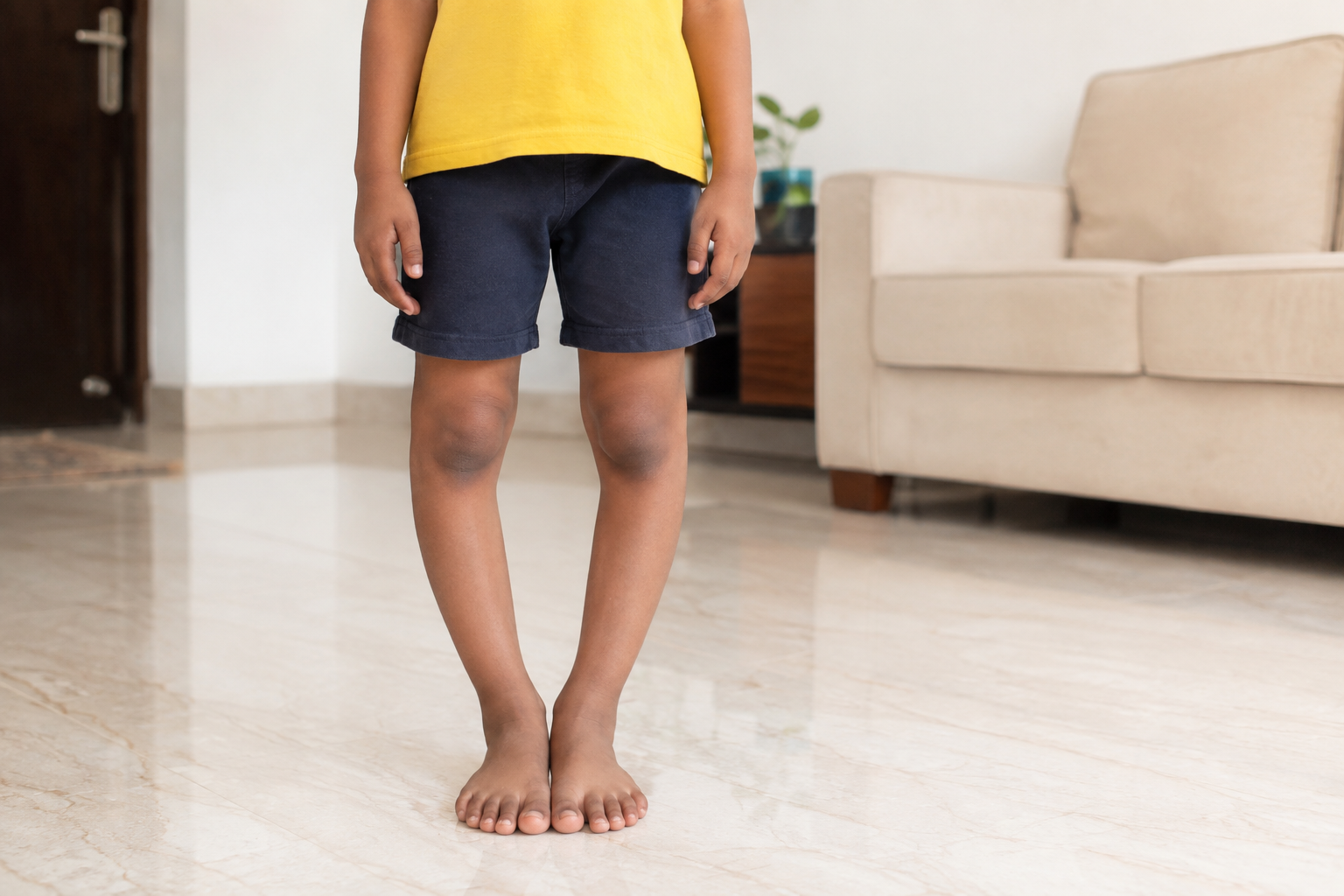
Watching your toddler take their first wobbly steps is one of the most exciting milestones of parenthood. But if you’ve noticed that your child’s legs curve outward at the knees, you may find yourself searching late at night for answers, wondering whether this is normal or something to worry about. Bow legs, medically known as genu varum, are incredibly common in babies and toddlers, and in most cases, they resolve on their own as a child grows. Still, understanding when bow legs are simply a normal part of development and when they signal an underlying issue is essential for every parent. This guide breaks down everything you need to know, from causes and symptoms to diagnosis, treatment, and when to see a specialist.
What Are Bow Legs?
Bow legs occur when a child’s knees stay wide apart even when their ankles are touching, creating a bowed or curved appearance in the legs. This is extremely common in infants because of the position babies are curled into while in the womb. Most babies are born with some degree of bowing, and it typically continues until around 18 months of age. As toddlers begin walking and their legs bear more weight, the bones naturally start to straighten. By the time a child reaches 3 to 4 years old, their legs usually look straight, and some children may even briefly develop knock knees before their legs settle into their final adult alignment by age 7 or 8.
Common Causes of Bow Legs in Children
In the vast majority of cases, bow legs are simply physiological, meaning they are a normal stage of a child’s natural growth and development. This type of bowing is symmetrical, affecting both legs equally, and gradually improves without any treatment. However, there are situations where bow legs stem from an underlying medical condition rather than typical growth patterns.
Blount’s disease is one of the more common pathological causes, where a growth disorder affects the shinbone and causes progressive bowing that worsens rather than improves with age. Rickets, caused by a deficiency in vitamin D, calcium, or phosphorus, can also lead to soft, weakened bones that bow under the child’s weight. In some cases, bow legs may be linked to skeletal dysplasias, bone infections, tumors, or previous fractures that healed improperly. Genetics can play a role too; if bow legs or related bone conditions run in the family, it’s worth mentioning this to your pediatrician during checkups.
Signs That Warrant a Doctor’s Visit
While mild bowing in infants and young toddlers is rarely a cause for concern, certain signs suggest it’s time to consult a specialist. Parents should watch for bowing that is asymmetrical, meaning one leg is more curved than the other, or bowing that appears to worsen after the age of two instead of gradually improving. If your child seems to be shorter than peers of the same age, walks with an unusual limp, or complains of pain in the legs or knees, these are important red flags. In the middle of monitoring your child’s growth milestones, it also helps to know that a Pediatric Orthopedic Surgeon Near Me can perform a simple physical exam and, if needed, order imaging tests to rule out conditions like Blount’s disease or rickets early, when treatment tends to be most effective.
How Bow Legs Are Diagnosed
Diagnosis typically begins with a thorough physical examination, where the doctor observes your child’s walking pattern, measures the angle of the legs, and checks for any asymmetry between the left and right sides. The doctor will also take a detailed history, asking about your child’s birth, growth patterns, diet, and family history of bone conditions. If the physical exam raises any concerns, X-rays are usually the next step, allowing the specialist to measure the exact degree of bowing and examine the growth plates for abnormalities. Blood tests may also be recommended if rickets or a metabolic bone condition is suspected. Getting an accurate diagnosis early is crucial, and this is where consulting the Best Orthopedic Surgeon in Pune can make a real difference, since experienced specialists can distinguish between normal developmental bowing and conditions that require active management.
Treatment Options for Bow Legs
For most infants and toddlers, no treatment is necessary because the condition resolves naturally as they grow. Pediatricians typically recommend simple observation, with regular checkups to track the angle of the legs over time using photographs or measurements. If the bowing is related to a nutritional deficiency like rickets, treatment usually involves correcting the underlying deficiency through vitamin D and calcium supplementation, along with dietary changes, which often allows the bones to gradually straighten as the child continues to grow.
In more persistent or severe cases, particularly those caused by Blount’s disease, doctors may recommend bracing to guide the growth of the bones in the right direction while the child is still young and growing rapidly. When bracing isn’t effective or the diagnosis is made later in childhood, surgical options such as guided growth procedures or an osteotomy, where the bone is carefully cut and realigned, may be considered. These decisions are never made lightly, and choosing a doctor who specializes specifically in children’s musculoskeletal conditions matters enormously here. Consulting a Pediatric orthopedic surgeon in Pune ensures that any treatment plan is tailored to a child’s unique growth stage rather than applying an adult-focused approach to a developing skeleton.
Living With and Managing Bow Legs at Home
While medical monitoring is important, there’s a lot parents can do at home to support healthy bone development. Ensuring your child gets adequate sunlight exposure and a diet rich in calcium and vitamin D, through foods like dairy, eggs, and leafy greens, supports strong bone growth. Encouraging age-appropriate physical activity helps build muscle strength around the joints, which can support proper alignment as your child grows. It’s also worth avoiding unnecessary worry over minor bowing that pediatricians have already assessed as normal, since stress can sometimes lead parents to seek unnecessary interventions. That said, staying consistent with follow-up appointments is key, and many families searching for the Best Orthopedic Doctor Near Me find that having a trusted specialist for ongoing monitoring brings real peace of mind throughout early childhood.
Why Early Evaluation Matters
Catching a pathological cause of bow legs early can significantly change the treatment path and outcome for a child. Conditions like Blount’s disease respond far better to bracing when caught before the age of four, and delayed diagnosis often means surgery becomes the only remaining option. This is why pediatricians recommend that any bowing which persists, worsens, or appears asymmetrical be evaluated promptly rather than waiting to “see if it goes away.” Families in and around Pimpri Chinchwad who notice these warning signs are encouraged to seek out the Best Orthopedic Doctor in Pimpri Chinchwad for a timely assessment, since early intervention is one of the strongest predictors of a smooth, brace-free recovery.
Meet Your Child’s Orthopedic Specialist
At Earth & Ether Clinic, children receive care built specifically around their growing bones and developing bodies. Dr. Shrirang Kulkarni brings years of focused experience in diagnosing and treating pediatric musculoskeletal conditions, from routine developmental bowing to complex cases requiring bracing or surgical correction. Parents consistently describe Dr. Shrirang Kulkarni as approachable, thorough, and genuinely invested in explaining every step of the diagnosis and treatment process in plain language, so families never feel left in the dark about their child’s care.
Earth & Ether Clinic has built a reputation as a trusted destination for families seeking clarity and expert guidance on their child’s bone and joint health. The clinic combines modern diagnostic tools with a warm, child-friendly environment, making evaluations far less stressful for young patients and their parents alike. Many parents researching the best pediatric orthopedic consultant in Pune are directed to Earth & Ether Clinic by pediatricians and fellow parents who have experienced firsthand how thorough and reassuring the consultation process can be.
Frequently Asked Questions
Q1. At what age do bow legs usually go away on their own?
Most children’s legs naturally straighten between the ages of 2 and 4 as part of normal growth.
Q2. Are bow legs painful for children?
Physiological bow legs are typically painless. Pain during walking or standing is a sign that warrants a doctor’s evaluation.
Q3. Can bow legs come back after treatment?
With proper diagnosis and treatment, recurrence is uncommon, though ongoing monitoring during growth spurts is recommended.
Q4. Is bracing uncomfortable for young children?
Modern pediatric braces are lightweight and designed for comfort, and most children adjust to them within a few days.
Q5. Should I see a specialist even if my pediatrician says it’s normal?
If you notice worsening bowing, asymmetry, or pain, a second opinion from a specialist offers added reassurance and early detection.
Ready to Get Your Child Evaluated?
If your child’s legs look bowed and you’re unsure whether it’s a normal stage of growth or something that needs attention, don’t wait for uncertainty to turn into worry. Book a consultation with Dr. Shrirang Kulkarni at Earth & Ether Clinic today, and get expert clarity, a personalized care plan, and the peace of mind every parent deserves. Call now or visit our website to schedule your child’s appointment.
