
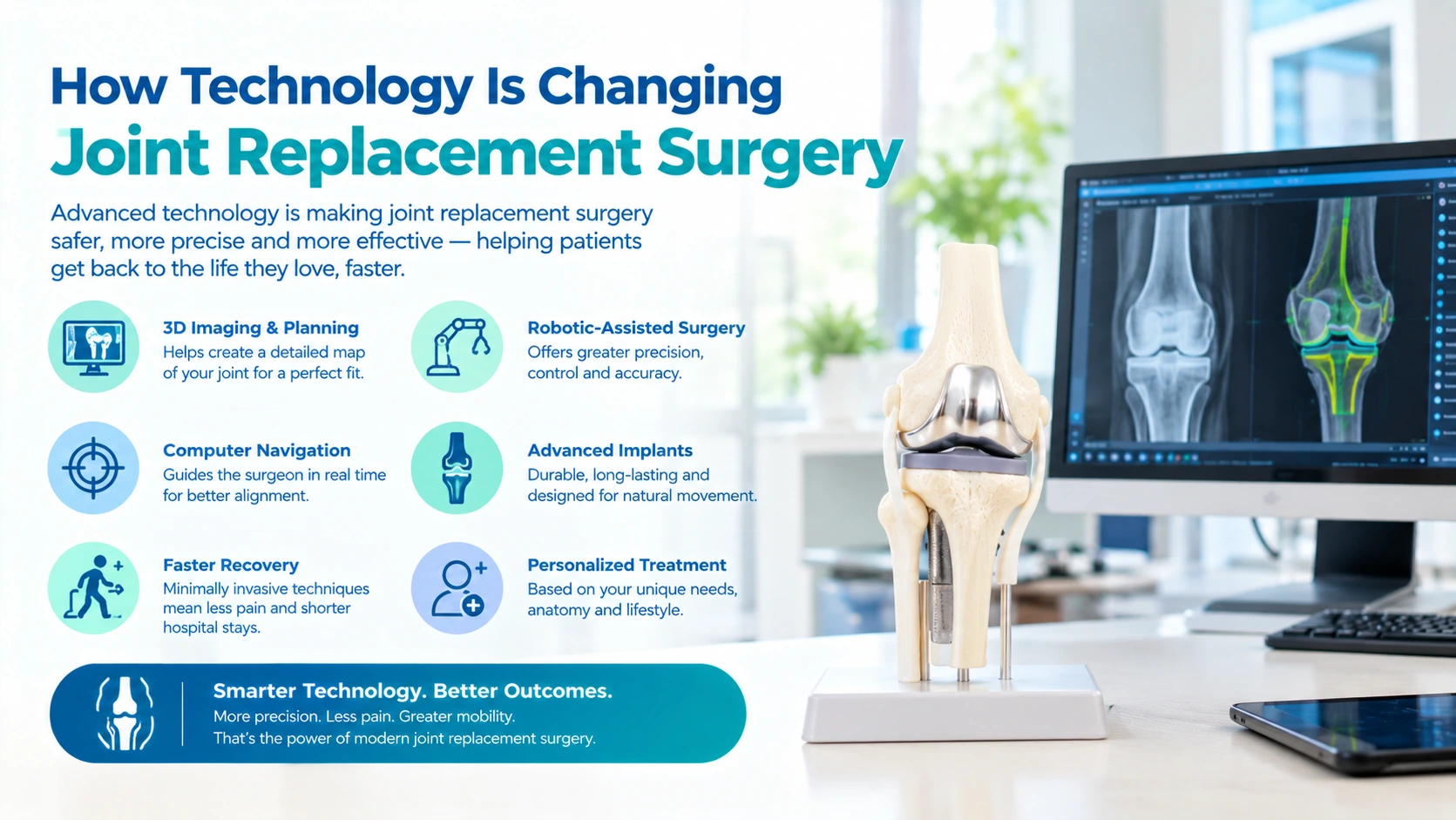
Joint replacement surgery has come a long way from the standardized, one-size-fits-all procedures of the past. Today, cutting-edge technology is reshaping every stage of the journey — from diagnosis and planning to the surgery itself and post-operative recovery. If you or a loved one is considering a knee or hip replacement, understanding these advancements can help you make a more informed, confident decision. This blog explores how modern technology is transforming outcomes, precision, and recovery times for patients.
Why Technology Matters in Joint Replacement
Traditional joint replacement relied heavily on a surgeon’s manual skill and generic implant sizing. While outcomes were generally good, there was room for variability. Modern technology minimizes that variability by offering data-driven precision, real-time feedback, and personalized planning — resulting in implants that fit better, last longer, and function more naturally.
Key Technologies Transforming Joint Replacement Surgery
1. Robotic-Assisted Surgery
Robotic systems have become one of the most significant breakthroughs in orthopedic care. These systems allow surgeons to plan the procedure using a 3D model of the patient’s joint before making a single incision. During surgery, robotic arms provide sub-millimeter precision, ensuring the implant is positioned at the exact angle and depth required for optimal function. This reduces the risk of implant misalignment, a common cause of long-term discomfort.
2. 3D Printing and Custom Implants
Every patient’s anatomy is different, and 3D printing technology now allows for the creation of patient-specific implants and surgical guides. This customization improves the fit of the implant, reduces bone loss during surgery, and can shorten operating time significantly.
3. Computer-Assisted Navigation
Computer navigation systems act like a GPS for the surgeon, tracking the exact position of surgical instruments relative to the patient’s bone structure in real time. This technology helps achieve accurate alignment even in complex cases involving bone deformities or previous surgeries.
4. Artificial Intelligence in Pre-Surgical Planning
AI algorithms now analyze imaging data, patient history, and outcome statistics from thousands of previous surgeries to recommend optimal implant size, positioning, and surgical approach. This predictive planning helps reduce complications and improves the likelihood of a successful, long-lasting outcome.
5. Minimally Invasive Techniques
Advances in surgical instruments and imaging now allow many joint replacements to be performed through smaller incisions. This means less muscle disruption, reduced blood loss, shorter hospital stays, and a faster return to daily activities compared to traditional open surgery.
6. Wearable Technology for Recovery Monitoring
Post-surgical recovery has also benefited from innovation. Wearable sensors and mobile apps now allow doctors to remotely monitor a patient’s range of motion, activity levels, and gait pattern after surgery, enabling timely adjustments to physiotherapy plans without requiring frequent in-person visits.
Benefits of Technology-Driven Joint Replacement
- Greater precision in implant placement and alignment
- Reduced surgical time through better pre-planning
- Faster recovery due to minimally invasive approaches
- Lower risk of complications with real-time surgical guidance
- Improved implant longevity through personalized fit
- Better long-term mobility and function for patients
Choosing the Right Specialist for Advanced Joint Care
Technology is only as effective as the expertise guiding it. Choosing a surgeon who is trained in these modern techniques is just as important as the technology itself. Many patients today search for the Best Orthopedic Surgeon in Pune specifically because they want access to advanced surgical technology paired with genuine clinical experience.
At Earth & Ether Clinic, under the expertise of Dr. Shrirang Kulkarni, patients benefit from a combination of advanced surgical technology and personalized, patient-first care. Every treatment plan is built around the individual’s anatomy, lifestyle, and recovery goals rather than a generic protocol.
Interestingly, technological precision in orthopedics isn’t limited to adult joint replacement — even a Pediatric orthopedic surgeon in Pune now relies on advanced imaging and computer-assisted diagnostics to plan treatment for growing bones and complex pediatric conditions, showing just how far this innovation has spread across the specialty.
If you’ve been searching for a Best Orthopedic Doctor Near Me who combines modern surgical tools with a compassionate approach, it’s worth prioritizing clinics that actively invest in the latest technology rather than relying solely on traditional methods.
Access to Advanced Care Across Pune
Patients across the region no longer need to travel far for world-class orthopedic technology. Residents searching for the Best Orthopedic Doctor in Pimpri Chinchwad now have access to the same advanced surgical systems previously available only in major metro hospitals.
For those specifically evaluating hip or knee replacement, it’s worth consulting one of the Best Joint Replacement Specialist Doctors in Pimpri, as their familiarity with robotic and computer-assisted systems can significantly influence surgical outcomes. Families in the western belt of Pune frequently reach out to an experienced Orthopedic Doctor in Rahatani for consultations, appreciating the convenience of specialized care close to home.
For patients weighing their options, exploring the Best Joint Replacement in Pimpri Chinchwad means looking beyond just the surgery itself — it means evaluating the full ecosystem of technology, surgical expertise, and post-operative support available at a clinic.
What to Expect During a Technology-Assisted Joint Replacement
- Initial Consultation and Imaging – Detailed scans and AI-assisted analysis of joint condition
- Surgical Planning – 3D modeling and personalized implant selection
- Robotic or Navigation-Assisted Surgery – Precise execution based on the pre-planned model
- Recovery Monitoring – Wearable tracking and guided physiotherapy
- Follow-Up Care – Regular assessments to ensure long-term joint health
Frequently Asked Questions (FAQs)
Q1: Is robotic joint replacement safer than traditional surgery?
Robotic-assisted surgery offers greater precision and can reduce certain risks like implant misalignment, but overall safety also depends significantly on the surgeon’s experience and the patient’s individual health condition.
Q2: Does technology-assisted surgery cost more?
It may involve a slightly higher upfront cost due to advanced equipment, but many patients find the improved precision, faster recovery, and reduced revision risk offer strong long-term value.
Q3: How long is the recovery period with modern techniques?
With minimally invasive and technology-assisted methods, many patients experience faster mobility improvements, though exact recovery timelines depend on the individual’s age, health, and adherence to physiotherapy.
Q4: Are robotic-assisted implants different from regular implants?
The implants themselves are similar in material; the difference lies in how precisely they are positioned and sized using robotic guidance and 3D planning.
Q5: Is every patient a candidate for robotic joint replacement?
Most patients are suitable candidates, but a thorough evaluation by an orthopedic specialist is necessary to determine the best surgical approach for your specific condition.
Q6: How do I choose the right hospital for joint replacement?
Look for a facility that combines advanced technology, experienced surgeons, transparent communication, and structured post-operative rehabilitation support.
Conclusion: Embracing the Future of Joint Care
Technology has fundamentally transformed joint replacement surgery — making it more precise, less invasive, and tailored to each patient’s unique anatomy. As these innovations continue to evolve, patients now have access to safer procedures and faster recoveries than ever before.
Schedule a consultation with Dr. Shrirang Kulkarni at Earth & Ether Clinic today to explore how advanced surgical technology can be part of your joint replacement journey. Take the first step toward pain-free movement with expert, technology-driven care designed around you.
