
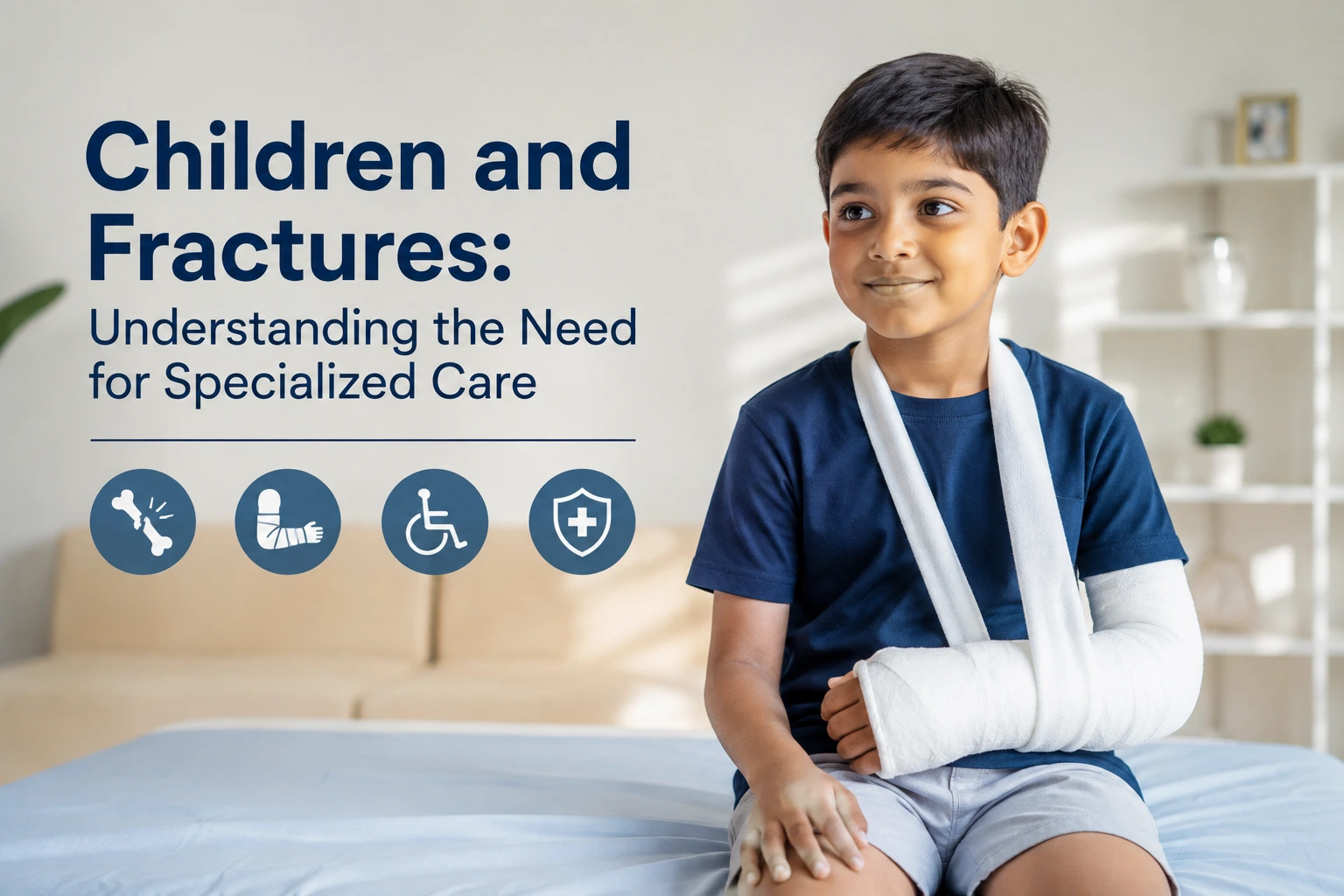
A fall from the monkey bars, a tumble off a bicycle, or an awkward landing during play — children get hurt often, and fractures are one of the most common childhood injuries. But here’s what many parents don’t realize: a child’s bone is not simply a smaller version of an adult bone. It grows, heals, and responds to injury in completely different ways. This is exactly why fractures in children demand a specialized approach rather than a one-size-fits-all treatment plan.
We break down why children’s fractures are unique, what parents should watch for, and why seeking care from a professional trained specifically in pediatric bone health can make all the difference in your child’s recovery and long-term development.
Why Children’s Fractures Are Different From Adult Fractures
Children’s bones contain a special region called the growth plate, located near the ends of long bones. This soft, cartilage-like tissue is responsible for a bone’s length and shape as a child matures. Unlike adult bones, which are fully hardened, a child’s skeleton is still flexible and actively growing — which means fractures can behave very differently.
Because of this flexibility, children often experience unique fracture patterns such as greenstick fractures (where the bone bends and cracks like a young tree branch rather than breaking completely) or buckle fractures (where the bone compresses instead of splitting). These patterns are rarely seen in adults and require a trained eye to diagnose and treat correctly.
If a growth plate injury is missed or mismanaged, it can potentially affect how a limb grows over time, leading to length discrepancies or alignment issues later in life. This is precisely why families are increasingly seeking out a Pediatric orthopedic surgeon in Pune who understands these nuances rather than relying on general fracture care.
Common Types of Fractures in Children
Children are naturally active, and their fractures often occur during play, sports, or accidental falls. Some of the most frequently seen fracture types include:
- Greenstick fractures – partial breaks common in young, flexible bones
- Buckle (torus) fractures – small bulges or compressions, often from falls on an outstretched hand
- Growth plate fractures – injuries near the growing ends of bones
- Supracondylar fractures – common elbow fractures in young children, often from falls
- Clavicle (collarbone) fractures – frequent in toddlers and infants, sometimes even from birth
Each of these requires a slightly different treatment strategy, and misdiagnosis can lead to complications that affect a child well into adulthood.
Signs and Symptoms Parents Should Watch For
Since young children may not always be able to clearly describe their pain, parents need to stay alert to physical cues. Common warning signs include:
- Visible swelling, bruising, or deformity around a joint or limb
- Refusal to move, bear weight on, or use the affected limb
- Persistent crying or discomfort when the area is touched
- A limb that appears bent, twisted, or misaligned
- Pain that worsens with movement and doesn’t improve with rest
If any of these symptoms appear after a fall, sports injury, or accident, it’s important not to wait it out. Early evaluation prevents improper healing and reduces the risk of long-term complications.
Why Specialized Pediatric Orthopedic Care Matters
General orthopedic treatment protocols designed for adults simply don’t translate well to children. A pediatric-focused approach considers the child’s ongoing bone growth, faster healing capacity, and the emotional aspect of treating a young, often frightened patient.
At Earth & Ether Clinic, the treatment philosophy is built around this exact understanding. Every case is assessed not just for the fracture itself, but for how the injury and its treatment will affect the child’s growth trajectory in the years ahead. This is the core reason experienced doctors like Dr. Shrirang Kulkarni emphasize child-specific imaging techniques, gentler immobilization methods, and age-appropriate pain management during treatment.
Parents searching for reliable help often look for a Best Orthopedic Surgeon in Pune who combines clinical expertise with genuine patience and communication skills — something that matters enormously when the patient is a scared, injured child.
Diagnosis and Treatment Approaches
Diagnosing a child’s fracture typically begins with a physical examination followed by imaging, most commonly X-rays. In some cases, especially where growth plate involvement is suspected, additional imaging like an MRI may be recommended to get a clearer picture of the injury.
Treatment options vary depending on the fracture type and severity:
- Casting or splinting – the most common treatment for stable fractures, allowing the bone to heal naturally
- Closed reduction – realigning the bone without surgery, often performed under sedation for comfort
- Surgical fixation – used for more complex or displaced fractures, sometimes involving pins, plates, or screws
- Growth plate monitoring – follow-up imaging over months or years to ensure normal growth resumes
Children generally heal faster than adults due to their active bone remodeling process, but this speed also means that timely, correct treatment in the first few days is critical to avoid improper alignment.
Recovery and Rehabilitation
Recovery isn’t just about the bone healing — it’s also about restoring strength, flexibility, and confidence in movement. Pediatric rehabilitation often includes light physiotherapy exercises tailored to a child’s age and comfort level, along with regular follow-up visits to track healing progress through imaging.
Parents play a huge role during this phase by ensuring their child follows activity restrictions, attends follow-up appointments, and avoids re-injury during the healing window. A good specialist will guide families through each stage clearly, setting realistic expectations for when a child can safely return to normal activities like school sports or playground play.
Choosing the Right Orthopedic Care in Pune and Pimpri Chinchwad
With so many treatment options available, choosing the right specialist can feel overwhelming for parents. It helps to look for a doctor with dedicated pediatric training, a track record of successful outcomes, and a clinic environment that feels welcoming to young patients.
Families in the western suburbs often begin their search by looking for the Best Orthopedic Doctor Near Me, only to realize that proximity alone isn’t enough — pediatric-specific expertise matters far more than convenience when it comes to a growing child’s bones.
For residents in the northern belt of the city, many parents specifically search for the Best Orthopedic Doctor in Pimpri Chinchwad, wanting a specialist who understands both trauma care and the developmental considerations unique to children. Meanwhile, others prioritize finding a Pediatric Orthopedic Surgeon Near Me to ensure quick access during emergencies, since fracture care often needs to begin within the first 24 to 48 hours for the best outcomes.
It’s also common for families to seek a second opinion or ongoing monitoring from a pediatric orthopedic consultant in Pune, particularly for complex fractures involving growth plates, where long-term follow-up is just as important as the initial treatment.
Local Access Matters for Emergency Fracture Care
Fractures don’t wait for convenient timing, which is why having a trusted specialist close to home is invaluable. Many parents in the region actively look for pediatric orthopedic in Pimpri Chinchwad clinics that can provide same-day evaluation and imaging, reducing the anxiety of long waits during an already stressful situation.
Similarly, residents in nearby residential pockets often search for an Orthopedic Doctor in Rahatani when their child is injured, valuing a nearby facility that can offer immediate X-rays, casting, and expert guidance without long travel times. For ongoing pediatric bone health concerns beyond emergencies — including follow-ups, growth monitoring, or minor sports injuries — many households also rely on consistent pediatric orthopedic in Rahatani care to maintain continuity with the same doctor over time.
When to See a Doctor
Not every bump or bruise requires a hospital visit, but certain signs should never be ignored. Seek immediate medical attention if your child shows:
- Visible deformity or the limb appears out of place
- Inability to move or bear weight on the affected area for more than a few hours
- Numbness, tingling, or a bluish tint in fingers or toes near the injury
- Fever accompanying the injury, which could indicate infection
- Pain that seems disproportionate to a minor fall
When in doubt, it is always safer to get the injury evaluated promptly rather than waiting to see if symptoms improve on their own.
Frequently Asked Questions
Q1. How can I tell if my child’s injury is a fracture or just a bruise?
Swelling, refusal to use the limb, visible deformity, and pain that doesn’t improve within a few hours are strong indicators of a fracture. An X-ray is the only definitive way to confirm it.
Q2. Do all children’s fractures require a cast?
No. Treatment depends on the fracture type and severity — some heal with a splint, while others may need casting, closed reduction, or in rare cases, surgery.
Q3. Will a fracture affect my child’s future bone growth?
Most fractures heal completely without long-term effects. However, growth plate injuries need careful monitoring, which is why specialized follow-up care is important.
Q4. How long does it typically take for a child’s fracture to heal?
Children generally heal faster than adults, often within 3 to 6 weeks depending on the bone involved and the child’s age, though growth plate injuries may need longer monitoring.
Q5. Should I go to a general orthopedic doctor or a pediatric specialist?
Whenever possible, choose a doctor with specific pediatric orthopedic training, as they are better equipped to handle growth-related considerations unique to children.
Conclusion and Next Steps
Children’s bones are remarkable in how they heal, but that potential can only be fully realized with the right care at the right time. Specialized pediatric orthopedic treatment isn’t just about setting a broken bone — it’s about protecting a child’s growth, mobility, and confidence for years to come.
If your child has recently experienced a fall, sports injury, or shows any signs of a fracture, don’t wait for symptoms to worsen. Book a consultation today and give your child the specialized care they deserve, guided by experienced hands who understand exactly how young bones heal.
Schedule your child’s orthopedic evaluation today — because early, expert care makes all the difference in a growing child’s recovery.
