
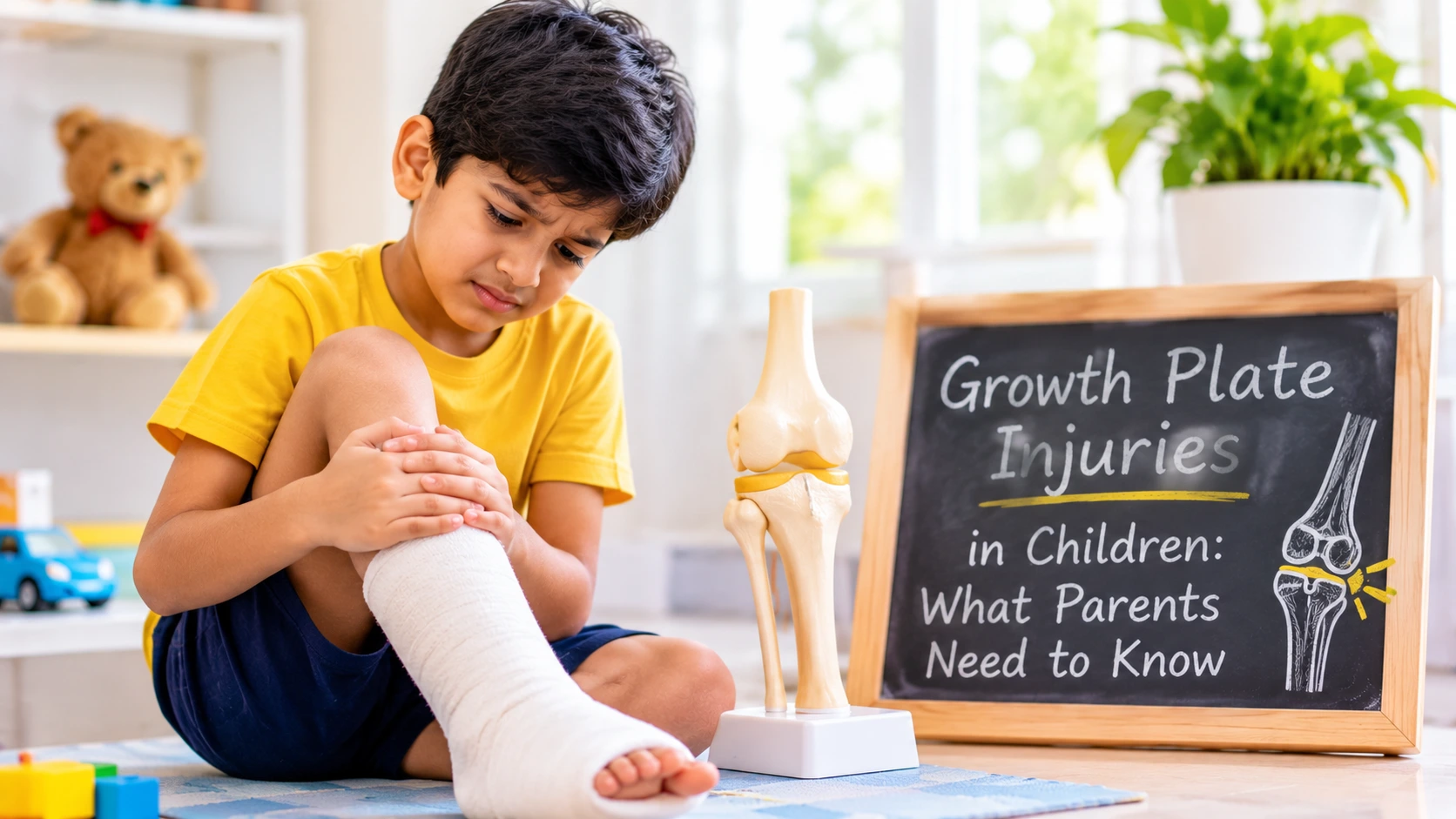
A fall from a bicycle, a tackle on the football field, or a bad landing from the playground slide: childhood is full of bumps and tumbles. Most are harmless, but sometimes a seemingly minor injury involves the growth plate, a delicate area of developing bone that controls how a child grows. Because these injuries can affect future bone length and alignment, understanding them is important for every parent. This guide explains what growth plates are, how to recognize an injury, and what treatment involves.
What Is a Growth Plate?
A growth plate (also called the physis) is a layer of soft cartilage found near the ends of long bones such as the thigh bone, shin bone, forearm, and fingers. It is where new bone is produced, allowing the bone to lengthen as the child grows. Once a child reaches skeletal maturity, usually in the mid-to-late teens, growth plates harden into solid bone.
Because cartilage is weaker than mature bone, growth plates are often the most vulnerable part of a child’s skeleton. In fact, a joint injury that might cause a sprain in an adult can cause a growth plate fracture in a child.
How Common Are Growth Plate Injuries?
Growth plate fractures account for a significant share of all childhood fractures. They are most common in children aged 10 to 16, especially boys, and frequently occur during sports like football, cricket, gymnastics, basketball, and skating. The wrist, ankle, and knee are the most commonly affected sites.
Common Causes
- Falls from heights, playground equipment, or bicycles
- Sports injuries involving collisions or twisting
- Road traffic accidents
- Repetitive stress from intense training, particularly in gymnasts and young athletes
- Infection or medical conditions that, in rare cases, affect the growth plate
Signs and Symptoms Parents Should Watch For
Growth plate injuries can look like simple sprains, which is why they are sometimes missed. Seek medical care if your child has:
- Persistent pain or tenderness near a joint
- Swelling, warmth, or bruising around the injured area
- Difficulty moving or putting weight on the limb
- Visible deformity or an unusual angle in the arm or leg
- Pain that continues for several days after a “sprain”
- A limb that looks shorter or bent compared to the other side
If in doubt, it is always safer to have the injury evaluated than to assume it is minor.
Types of Growth Plate Fractures
Doctors commonly classify these injuries using the Salter-Harris system, which describes how the fracture involves the growth plate, ranging from Type I (a break through the plate only) to Type V (a crush injury to the plate). The type determines the treatment approach and the risk of growth disturbance. Higher-grade injuries need closer monitoring because they carry a greater chance of affecting future growth.
How Are Growth Plate Injuries Diagnosed?
A specialist will typically:
- Review how the injury occurred and the child’s symptoms
- Examine the limb for tenderness, swelling, and range of motion
- Order X-rays, sometimes comparing with the uninjured side
- Use MRI or CT scans for complex or unclear cases
Accurate diagnosis is essential, since a hidden growth plate injury can lead to complications if untreated.
Treatment Options
Immobilization
Many growth plate fractures heal well with a cast or splint, allowing the bone to mend naturally while limiting movement.
Manipulation or Reduction
If the bone fragments are displaced, the doctor may carefully realign them, sometimes under anesthesia, before casting.
Surgery
Some fractures require surgery to restore proper alignment, using pins, screws, or small plates to hold the growth plate in position as it heals.
Rehabilitation and Follow-Up
Physiotherapy helps restore strength and flexibility. Regular follow-up visits and X-rays over months, and sometimes years, ensure the bone continues to grow normally.
Possible Complications
Most children recover completely, but some injuries can lead to:
- Uneven limb lengths
- Angular deformities, such as a bent limb
- Premature closure of the growth plate
- Joint stiffness or early arthritis in later life
Prompt, specialist-guided care significantly reduces these risks.
Choosing the Right Specialist
When your child’s growth is at stake, choose a doctor experienced in children’s bone injuries. A Pediatric orthopedic surgeon in Pune understands how growing bones heal differently and can tailor treatment to the child’s age, the type of injury, and the remaining growth potential, which is especially important for long-term follow-up.
Expert Care at Earth & Ether Clinic
At Earth & Ether Clinic, Dr. Shrirang Kulkarni offers careful evaluation and treatment for children’s fractures and growth-related injuries. The focus is on accurate diagnosis, the least invasive effective treatment, and clear communication so parents understand every step of their child’s recovery.
Access to Quality Care Across the Region
Complex injuries sometimes call for a second opinion or advanced surgical planning. In such cases, many families look for the Best Orthopedic Surgeon in Pune to make sure the treatment plan is thoroughly evaluated. For convenient, ongoing follow-up, parents in the twin-city belt often search for the Best Orthopedic Doctor in Pimpri Chinchwad, as regular checkups are an essential part of recovery.
Families also value clinics that can support every generation. Parents seeking the Best Joint Replacement in Pimpri Chinchwad for older relatives often appreciate a single trusted orthopedic practice that can also care for the children in the household.
Prevention Tips for Parents
- Ensure children wear proper protective gear during sports
- Encourage warm-up and stretching before activity
- Avoid overtraining and allow adequate rest between sessions
- Supervise play on high or hard surfaces
- Provide a diet rich in calcium and vitamin D
- Teach safe falling and landing techniques where relevant
Frequently Asked Questions (FAQs)
Q1: Can a growth plate injury look like a sprain?
Yes. Pain and swelling near a joint after injury can be a growth plate fracture, so persistent symptoms deserve an X-ray.
Q2: Will my child stop growing after a growth plate injury?
Most children continue to grow normally. Serious injuries may affect growth, which is why follow-up is important.
Q3: How long does recovery take?
Many fractures heal in four to eight weeks, though follow-up may continue for months or longer depending on the injury.
Q4: Does every growth plate fracture need surgery?
No. Many are treated with casting. Surgery is needed only when the bone is displaced or unstable.
Q5: When can my child return to sports?
Only after the doctor confirms healing and strength has returned, typically following a gradual, supervised return to activity.
Q6: Is a growth plate injury an emergency?
Visible deformity, severe pain, or inability to move the limb needs urgent care. Milder symptoms still warrant evaluation within a day or two.
Conclusion: Act Early to Protect Your Child’s Growth
Growth plate injuries are common, treatable, and usually heal well when recognized early. The key is not to ignore persistent pain or swelling, and to seek expert evaluation promptly.
Book a consultation with Dr. Shrirang Kulkarni at Earth & Ether Clinic today. Give your child the benefit of expert, compassionate care so they can return to play safely and keep growing strong.
