
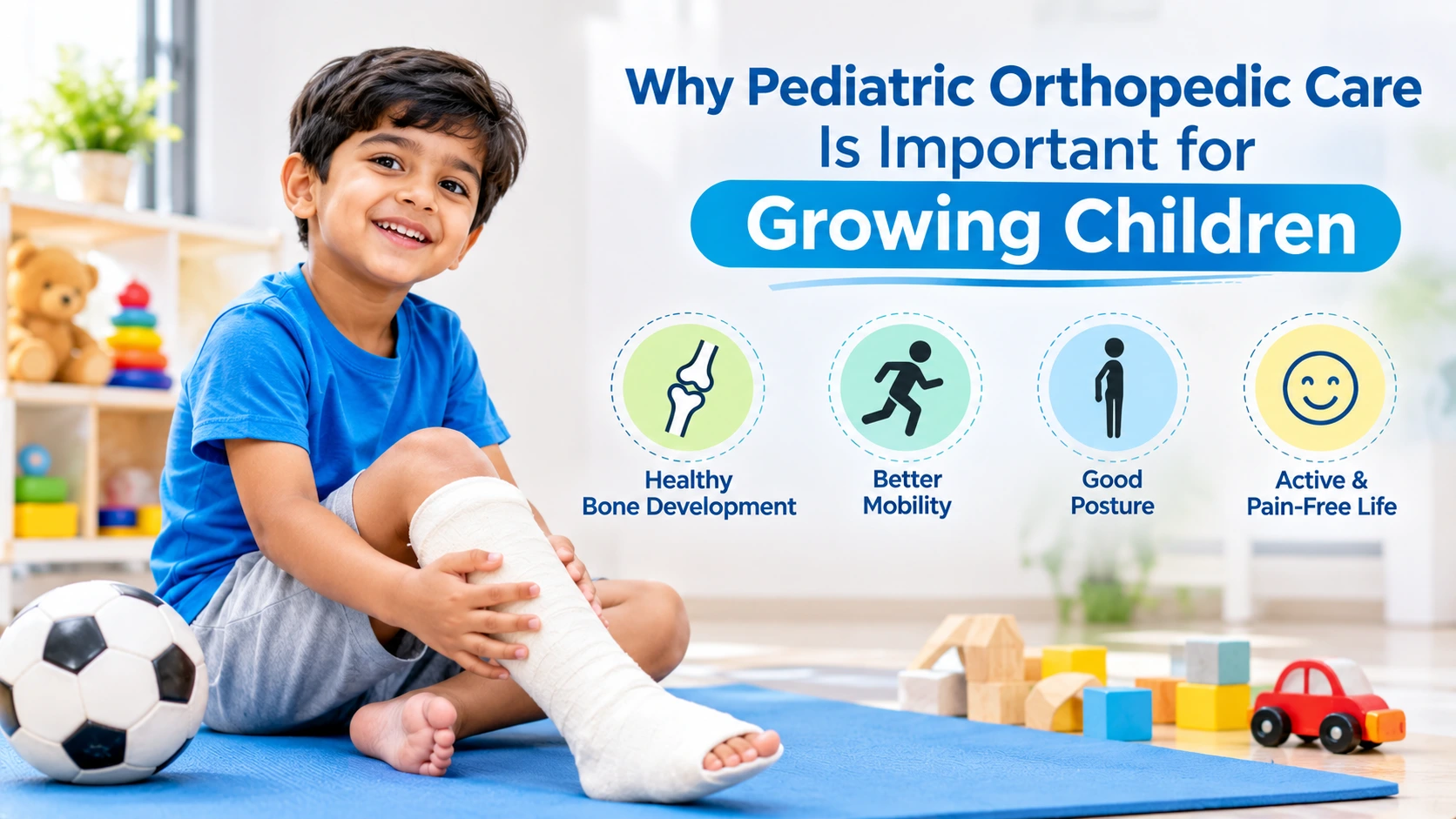
Watching a child grow is one of the greatest joys of parenthood, but it also comes with questions. Is my child’s walking pattern normal? Why does one leg look different from the other? Is this back posture something to worry about? Because children’s bones, joints, and muscles are still developing, even small problems can have lasting effects if they go unnoticed. That is exactly why pediatric orthopedic care matters. This guide explains how children’s bones differ from adults’, which conditions need attention, and when to seek specialist help.
Children Are Not Small Adults
A child’s skeleton is fundamentally different from an adult’s. Growing bones have growth plates (physes), areas of developing cartilage near the ends of long bones that control how the bone lengthens. These plates are softer and more vulnerable to injury than the surrounding bone. Damage to a growth plate can lead to uneven limb length or angular deformities if not treated properly.
Children’s bones also heal faster and remodel more actively, which means timing is critical. A deformity that could be corrected simply at age four may need a more complex approach at age ten. Specialized pediatric orthopedic care ensures treatment is matched to the child’s growth stage, not just the visible problem.
Why Early Evaluation Makes a Difference
Early assessment offers several important benefits:
- Prevents progression of deformities such as scoliosis or clubfoot
- Allows non-surgical correction, such as casting, bracing, or physiotherapy, while bones are still flexible
- Protects long-term mobility, reducing the risk of early arthritis or chronic pain
- Supports normal development, helping children walk, run, play, and participate in school activities confidently
- Reduces parental anxiety by clearly separating normal variations from true concerns
Common Pediatric Orthopedic Conditions
Clubfoot (Congenital Talipes Equinovarus)
A condition in which a baby’s foot is turned inward and downward. Early treatment, often starting within the first weeks of life, achieves excellent results without major surgery in most cases.
Developmental Dysplasia of the Hip (DDH)
A condition in which the hip joint doesn’t form properly. Early detection through physical examination and ultrasound allows simple treatment with harnesses or braces.
Bow Legs and Knock Knees
Mild alignment changes are a normal part of growth, but persistent, asymmetrical, or painful cases need evaluation.
Flat Feet and In-Toeing
Most cases are harmless and resolve with age, but some require footwear advice, exercises, or monitoring.
Scoliosis
A sideways curvature of the spine, most often detected during adolescence. Regular screening helps catch progression early.
Fractures and Growth Plate Injuries
Children’s fractures differ from adults’ and need careful management to avoid growth disturbances.
Limping and Growth-Related Pain
Persistent limping, night pain, or unexplained leg pain should never be dismissed as just “growing pains.”
Warning Signs Parents Should Not Ignore
Consult a specialist if your child shows:
- A persistent limp or refusal to bear weight
- Uneven shoulders, hips, or leg lengths
- Foot or leg deformity noticed from birth
- Pain that wakes the child at night
- Delayed walking beyond 18 months
- Frequent tripping or clumsiness
- Visible back curvature or abnormal posture
Choosing a Specialist for Your Child
Parents searching for a Pediatric orthopedic surgeon in Pune should look for someone with dedicated experience in children’s bone and joint disorders, a patient and child-friendly approach, and a preference for conservative treatment where appropriate. A good specialist explains the condition to both parents and children in simple language, reducing fear and building cooperation, which is especially important for long-term treatment plans such as bracing or serial casting.
Expert Care at Earth & Ether Clinic
At Earth & Ether Clinic, Dr. Shrirang Kulkarni provides careful, evidence-based evaluation for children’s musculoskeletal concerns. The approach focuses on accurate diagnosis, early intervention, and treatment plans designed around the child’s growth, comfort, and daily activities. Parents are involved at every step, with clear explanations of options, expected outcomes, and follow-up schedules.
Care That Supports the Whole Family
Many families prefer one trusted clinic for everyone in the household, from a toddler with flat feet to a grandparent with arthritis. Those looking for the Best Joint Replacement in Pimpri Chinchwad for older family members often appreciate a clinic that also handles children’s bone health, making appointments simpler and care more consistent. Similarly, families searching for the Best Orthopedic Surgeon in Pune often look for someone who treats all age groups with the same attention to detail.
Accessible Care Close to Home
Regular follow-ups are essential in pediatric orthopedics, since growth changes can alter treatment plans over time. Having a clinic within easy reach makes consistency far more achievable. Residents of Wakad and nearby areas often look for an Orthopedic Doctor in Wakad for convenient access to care, while those in the surrounding twin-city region frequently search for the Best Orthopedic Doctor in Pimpri Chinchwad to find experienced specialists without long travel times.
How Parents Can Support Healthy Bone Growth at Home
- Provide a balanced diet rich in calcium, protein, and vitamin D
- Ensure adequate sunlight exposure and outdoor play
- Encourage regular physical activity suited to the child’s age
- Choose well-fitting, supportive footwear
- Limit excessive screen time and promote good posture
- Attend routine pediatric check-ups to track growth milestones
Frequently Asked Questions (FAQs)
Q1: When should I take my child to a pediatric orthopedic specialist?
If you notice a persistent limp, visible deformity, uneven limb lengths, unexplained pain, or delayed walking, it is best to seek an evaluation rather than wait.
Q2: Are growing pains normal?
Mild, occasional leg aches in the evening can be normal, but pain that is severe, one-sided, or wakes your child at night needs medical evaluation.
Q3: Will my child need surgery?
Not usually. Many conditions respond well to observation, bracing, casting, or physiotherapy. Surgery is reserved for specific cases where other options aren’t effective.
Q4: Can flat feet be corrected?
Most children’s flat feet are flexible and painless and need no treatment. Persistent or painful cases may benefit from exercises, supportive footwear, or further evaluation.
Q5: How is a child’s fracture different from an adult’s?
Children’s bones heal faster but can be injured at the growth plate, which needs careful treatment to prevent growth problems.
Q6: At what age should scoliosis screening happen?
Screening is generally recommended during early adolescence, though any visible spinal curve or uneven shoulders should prompt an earlier check.
Conclusion: Invest in Your Child’s Healthy Future
Childhood is the one chance to guide bone and joint development in the right direction. Early evaluation, accurate diagnosis, and timely treatment can prevent small concerns from becoming lifelong limitations.
Book a consultation with Dr. Shrirang Kulkarni at Earth & Ether Clinic today. Give your child the benefit of expert, compassionate pediatric orthopedic care, so they can grow, play, and thrive with confidence.
